5 things every Wiltshire tradesperson's website needs to actually get phone calls
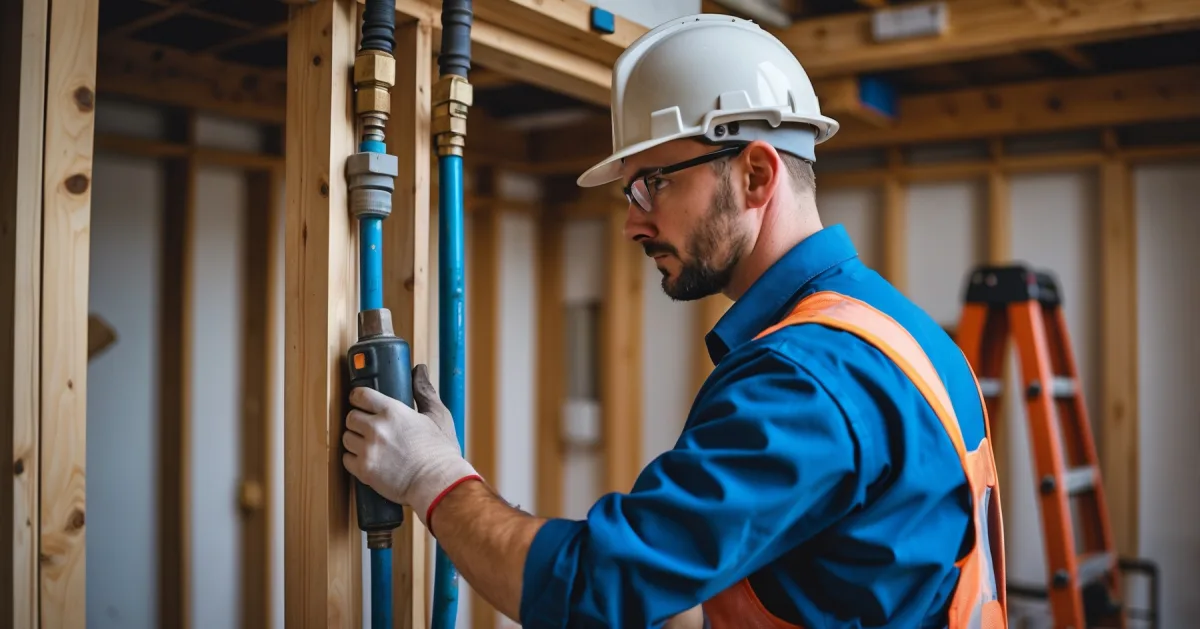
If you are a plumber, electrician, builder or joiner in Wiltshire and your website is not bringing in calls, odds are it is missing one or more of these five things. Here is what fixes it.
If you run a trade in Wiltshire, your website has one job: turn a person who googled "electrician Swindon" at 7:45pm on a Tuesday into a phone call before bedtime.
That is a narrow job. Most trades websites miss on it completely, not because they look bad, but because they are designed around the business owner's ego rather than the customer's problem.
Here is what I see working on sites that actually generate calls, pulled from two decades of building them.
1. A phone number in the top right corner of every page
Not hidden in the footer. Not behind a "contact" link. Not conditionally displayed based on scroll. Just there, obvious, clickable on a phone, on every single page.
Half the trades sites I audit make the visitor go hunting for a phone number. The other half display it as an image so it cannot be clicked or copied. If a panicked customer is trying to find an emergency plumber on their phone at 10pm, they are not hunting for anything. They will tap the first clickable number they see, and that number will belong to whoever made it easiest.
The implementation is trivially simple. tel:+441380... as an anchor tag. Three lines of HTML, a 400% increase in conversion.
2. Your service area as a visible list, not just a map
"We cover Wiltshire" is not specific enough. "Wiltshire" is a big county. The customer needs to know, in twenty seconds, whether you will come to where they are.
Works better: a visible list of towns and postcodes. "Devizes (SN10), Chippenham (SN14/15), Marlborough (SN8), Swindon (SN1-SN5), Trowbridge (BA14), Warminster (BA12)." Villages worth naming too if you travel to them.
This does two jobs at once. It tells the customer you serve them. And it puts town names on your page, which helps you rank when someone in Bradford-on-Avon types "plumber Bradford on Avon" , because your page now has that town in its text.
A Google map is fine as well. But the map is for trust. The list is for confirmation.
3. Real, recent customer reviews
Not a generic "what our customers say" block with made-up quotes. Not five-star Checkatrade badges with no content behind them. Real reviews, named, dated, ideally with a job description.
"Fitted a new consumer unit, arrived on time, cleaned up afterwards." Bob Smith, Devizes, March 2026.
Reviews from a platform like Google, Checkatrade or Trustatrader carry more weight because they are verified. If you have them, embed them. If you do not, ask your last five happy customers. It is a two-line email.
Trust is the single biggest barrier to phone calls for tradespeople. A reviews section reduces that barrier by more than anything else you can put on the site.
4. Clear pricing signals (even if you do not publish prices)
Most trades cannot publish exact prices because every job is different. That does not mean you have to be opaque.
Working examples:
- "Typical kitchen rewire: £1,800 to £2,600 depending on scope."
- "Emergency callout: £85 during working hours, £125 outside."
- "Minimum call-out: 2 hours."
- "Free quotes within 30 miles of Devizes."
These single sentences do an enormous amount of work. They filter out tyre-kickers who expected you to work for £40. They reassure qualified customers that you are not going to ambush them with a surprise invoice. They show you are a real business, not a cowboy, because cowboys never publish ranges.
You do not need to publish a full price list. You need to publish enough for a customer to self-qualify.
5. Evidence you have done the exact job they need
A photo gallery labelled "recent work" is only a start. Better: a short write-up of three to five representative jobs. Not a case study. Just a paragraph each.
"Last month: rewired a 1930s semi in Corsham. Existing wiring was a mix of rubber and PVC, replaced with new consumer unit and RCBOs. Two days, no disruption to the family. Before and after photos below."
That single paragraph does more than a brochure of stock photos. It tells a customer you have encountered their situation before. It gives you something to mention on the phone ("yes, that sounds like the Corsham job last month"). It uses local town names, which help your SEO. And it is honest.
If you can do one of these every couple of months, inside a year you will have more real, specific evidence on your site than 90% of your competitors.
The thing these five have in common
They are all about reducing the customer's uncertainty. That is what a trades website should do. Not win design awards. Not display your whole CV. Not feature a hero video of a van.
A customer lands on your page because they have a problem. Their uncertainty, in order, is:
- Do you cover where I am?
- Are you an actual business?
- Can you do the specific job I need?
- Roughly what will it cost?
- How do I get hold of you?
If your home page answers those five questions in under a minute, you get the phone call. If it doesn't, someone else does.
If you want a second opinion
I audit websites for free for Wiltshire trades. You get a PDF back covering speed, SEO, trust signals and whether the site is actually answering those five questions. No obligation, no sales pitch , if the site is fine, I will tell you it is fine.
Got Questions?
Frequently Asked Questions
How much does a trades website typically cost in Wiltshire?
Do I really need a separate website if I am on Checkatrade?
How long does it take to start getting calls from a new website?
Roger Udall
Full stack web developer based in Devizes, Wiltshire. Building bespoke web applications for small and medium businesses since 1999.
More about me